
Energy optimization through migration to natural gas and more efficient fuels
Who is it aimed at?
Applicable to manufacturing, cement, mining and agro-industrial industries, as well as chemical processes, food and beverages, and hospital and hotel infrastructure.
What is it?
Boiler conversion is a technical process that adapts existing thermal systems to operate with a new fuel, by adapting burners, feeding, control and safety systems, reconfiguring combustion parameters and validating thermal efficiency and emissions, optimizing the performance and environmental profile of the system.
¿Qué hacemos?
We transform conventional thermal systems into more efficient and cleaner solutions through boiler conversion projects, integrating engineering, technical adaptation and regulatory compliance for a safe transition to natural gas or more competitive energies.
How do we do it?
- Evaluation and Feasibility Engineering
- Adaptation of Burners and Combustion Systems
- Integration with Gas Supply Systems
- Automation and Control
- Testing, Commissioning and Optimization
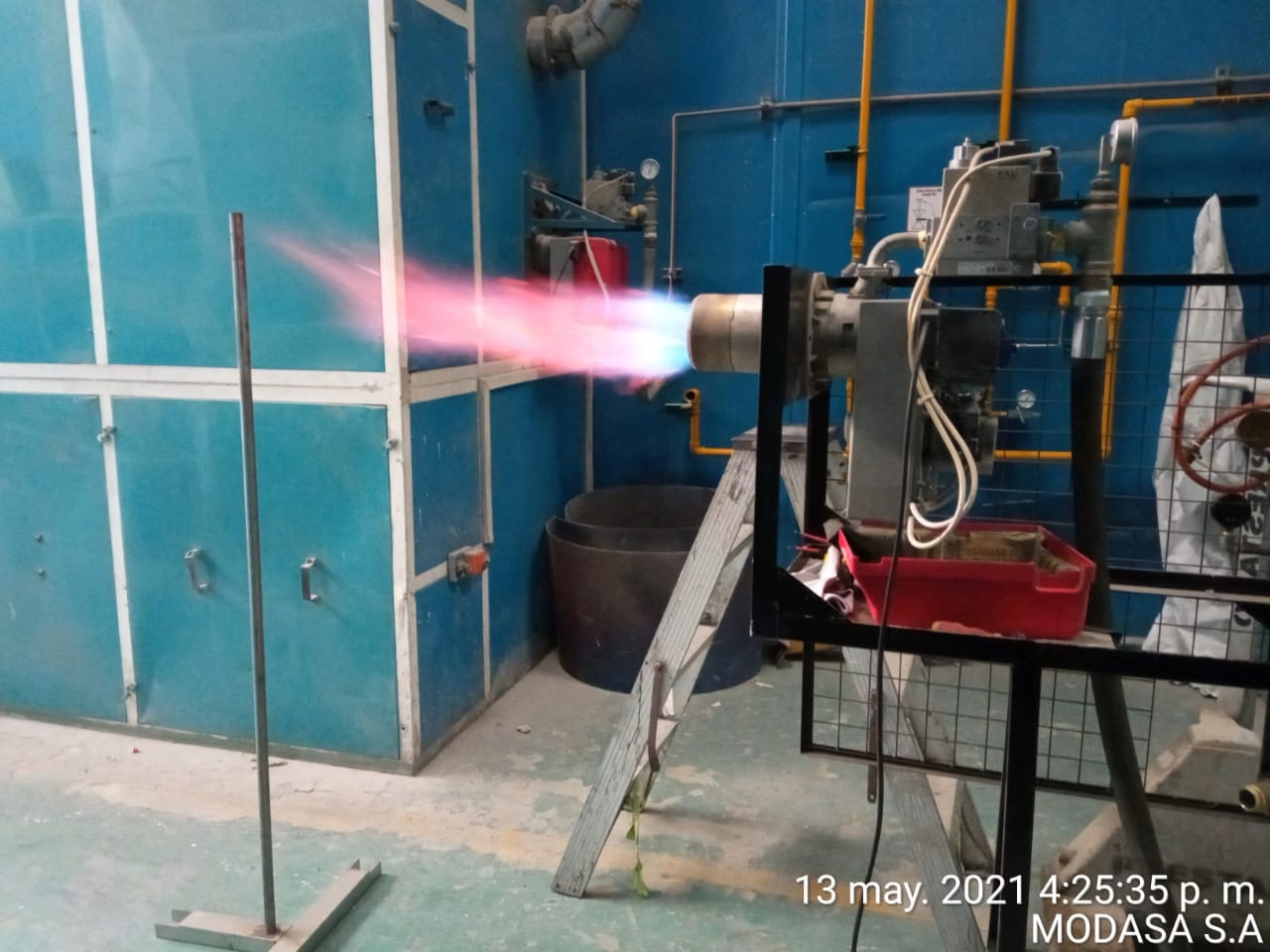
Burner combustion system for internal GN network - Modasa S.A.
Implementación y optimización de sistema de combustión para quemadores industriales conectados a red interna de gas natural, garantizando eficiencia térmica, seguridad operativa y cumplimiento de estándares técnicos.
What exactly does the turnkey process for converting a boiler to natural gas involve?
It includes the initial audit, thermal engineering, provision of a dual or gas burner, installation of the electronic valve train (ERM), electrical modifications, and combustion calibration.
What technical parameters do we evaluate in the pre-conversion audit of the burner?
We analyze the condition of the boiler furnace, the back pressure, the maximum steam demand, the space available for the gas train, and the feasibility of connecting to the network or virtual pipeline.
How much can be saved operationally by switching to LNG/CNG energy matrix?
Fuel savings range from 30% to 50% compared to using diesel or LPG. In addition, maintenance costs for soot cleaning are drastically reduced.
How long should the boiler be out of service during mechanical execution?
We optimize lead times by pre-assembling the gas trains in our workshop. Actual equipment downtime is usually minimal, strategically scheduled to avoid interrupting production.
How does the conversion to natural gas impact the company's environmental certifications?
Natural gas eliminates sulfur emissions and drastically reduces CO2 and particulate matter, facilitating compliance with environmental audits and corporate ESG goals.
What safety regulations govern the installation of regulation and measurement trains?
We install gas trains in strict compliance with the Peruvian Technical Standard (NTP) and international standards (NFPA 85), guaranteeing safe ventilation and venting systems.
Does converting to natural gas extend the lifespan of the original thermal equipment?
Yes, because combustion is clean and free of impurities, corrosion and the accumulation of deposits in the tubes are minimized, significantly extending the boiler's lifespan.
